Blog
Latest updates, deep dives, and announcements from the agentgateway community.
Agents on Every Cloud
Solo.io has published the open source distributions of kagent and agentgateway on all three major cloud marketplaces: AWS Marketplace, Microsoft Azure Marketplace, and Google Cloud Marketplace. Both are free to deploy, and both install into your cluster the same way you already consume other cloud services: subscribe, pick a cluster, done. No Helm repo setup, no copying manifests from a README, and the deployment shows up in your cloud account alongside everything else you run there.
How Agentgateway Performs as an Inference Gateway
How Agentgateway Performs as an Inference Gateway
A GSoC 2026 project summary — Abhay Chaurasiya, mentored by Nina Polshakova and Daneyon Hansen, CNCF
The Backstory
This work originally started as an attempt to benchmark the inference routing extension in kgateway (kgateway-dev/kgateway#12289). As we got further into it, though, it made more sense to focus on agentgateway instead. Since agentgateway is the component acting as the sidecar proxy for EPP, benchmarking there gives us a more direct picture of the impact. The work has been tracked in agentgateway/agentgateway#85 since then.
Invoice-Grade Attribution on Amazon Bedrock with Agentgateway
A gateway is both the best and the worst thing that happens to your AI bill. The best, because every model request flows through one place, so tagging and budgets become possible at all. The worst, because on AWS all of that traffic typically authenticates through one IAM role, so the provider sees exactly one caller. Finance opens the bill and Amazon Bedrock is a single line item. Your gateway dashboard knows who spent what, but it knows it as an estimate, computed from token counts and price sheets, and finance does not reconcile against estimates. Finance reconciles against the numbers AWS actually bills.
Benchmarking Agentgateway vs LiteLLM's Rust Mode
Since I published my benchmark of agentgateway vs. LiteLLM (Part 1 and Part 2), I’ve received quite a few questions about LiteLLM’s newly added Rust mode. So I decided to compare its performance with agentgateway.
Rather than comparing features, I wanted to answer a simple question:
How much proxy overhead does LiteLLM’s Rust mode introduce compared with agentgateway?
Similar to my previous benchmarks, I wanted to measure:
- Throughput (QPS)
- Request latency
- CPU utilization
- Memory usage
The goal is to isolate the performance overhead introduced by each proxy.
From Adopter to Contributor: iFLYTEK's Journey with agentgateway
iFLYTEK (科大讯飞) is a publicly listed AI company headquartered in Hefei, China, founded in 1999. We are best known for our speech and language technology — speech recognition, machine translation, and cognitive intelligence — and more recently for our Spark large language model family and the agent platform built on top of it.
Within iFLYTEK, our team builds the infrastructure that powers internal agentic applications, such as astron-agent, which was the No. 1 trending repository on GitHub as of August 7, 2026. Our work includes connecting agents to tools through MCP, enabling agent-to-agent communication through A2A, and routing traffic to LLM backends.
Credential Injection Patterns for AI Agents: Part 2, Securing the Vault
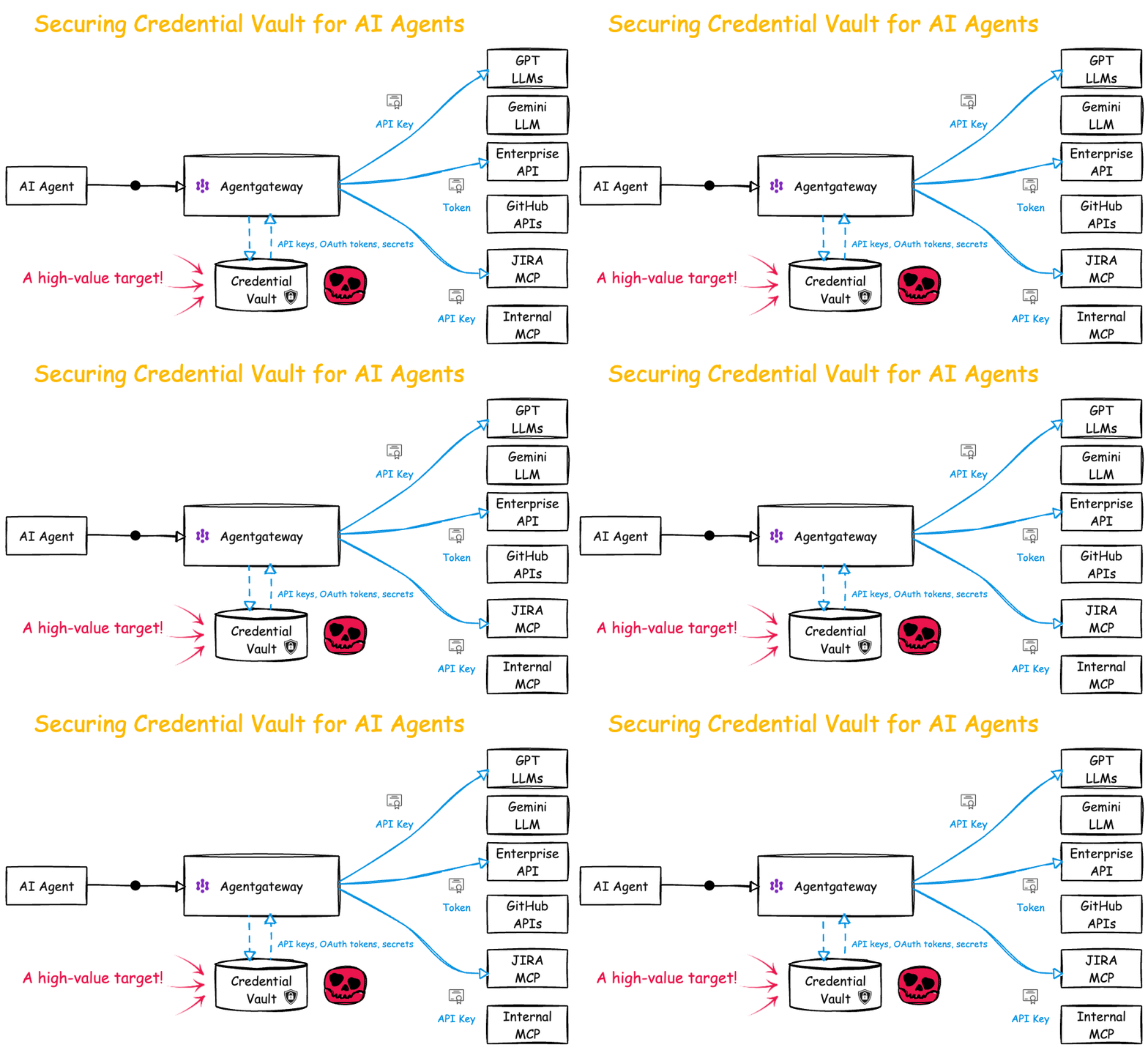
In part 1, I made the case that the only credential brokering model from the CB4A paper that really works for AI agents today is the one where the agent never holds a credential at all. The agent uses its identity/OBO, calls through the proxy, the proxy injects the real token just in time, and the agent’s memory never contains any credential. The agent can’t be tricked to exfiltrate (or willingly hand over) any credentials.
Agentgateway out the gate with support for the 2026-07-28 MCP specification with release of version 1.4
The latest revision of the MCP specification -- 2026-07-28 -- is finally out.
There are plenty of resources out there talking about the new revision. One that I came across a couple of weeks ago is An MCP Tool Call Deconstructed, which I’m sure you’ll enjoy.
One thing is undeniable: the people involved in bringing about this new revision have not been idle. It feels like solid progress on multiple fronts as we continue to evolve and refine the way we build agentic solutions.
Semantic Routing, Assembled: agentgateway and vLLM Semantic Router in Practice
In our previous post on semantic routing with agentgateway and vLLM Semantic Router we focussed on the benefits model selection can bring to agentic systems in terms of costs. We demonstrated that by analyzing and classifying each prompt, we can send routine work to cheap models, while keeping the frontier models doing the hard stuff. As a result, workloads can be processed ~40% cheaper, without the model consumer ever having to explicitly pick a model. In that post, we treated the router as a black box: agentgateway sends the received prompt to the router, the router picks a model, agentgateway routes the request to the selected model, processes the response, and records the conversation’s metrics.
Credential Injection Patterns for AI Agents
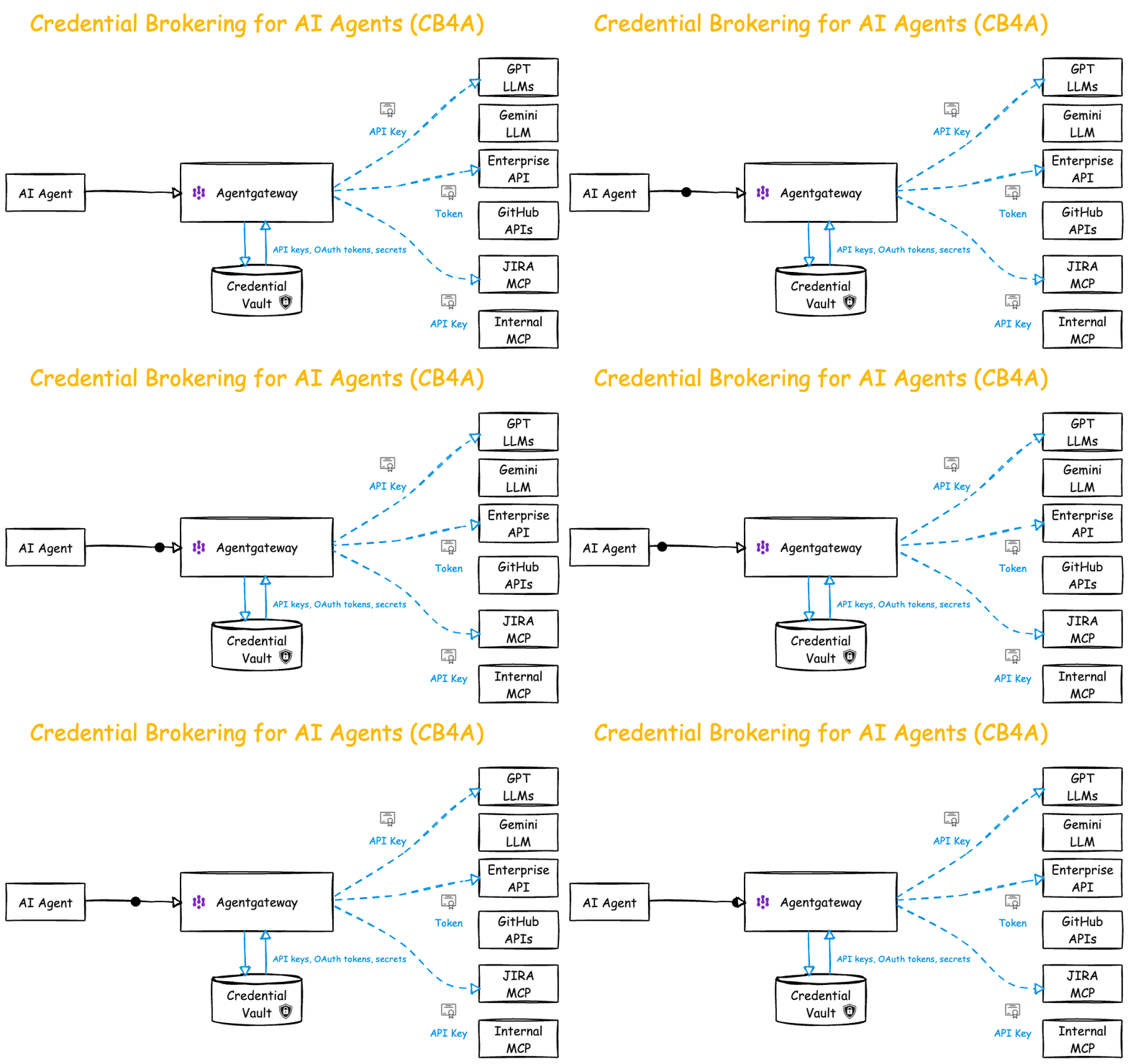
Your AI agent needs to call APIs, LLMs, databases, and SaaS services, MCP etc. Every one of those calls has to authenticate somehow. So before you get to sandboxing, egress rules, or where the agent runs, there’s a more basic question: at the moment the agent makes a call, where does the credential live? If the answer is anywhere the agent can read, e.g. its environment, its config, its context window etc then you’ve decided to trust the agent with a reusable secret.
Optimize Token Cost with Context Compression in agentgateway
You pay for the full context of every LLM request, and agents multiply that cost on every round trip with the model. Verbose tool results, documents quoted whole, and retrieved chunks kept “just in case” ride along on every turn. The waste adds up quickly: a 50KB tool result is roughly 12,000 tokens, paid for again on each turn of a 30-turn session, at a discount when provider caching works and at full price when it doesn’t. And the cost isn’t only money: models attend less reliably to what matters when it’s buried in noise.
MCP goes stateless with headers. Do you need an MCP-native data plane?
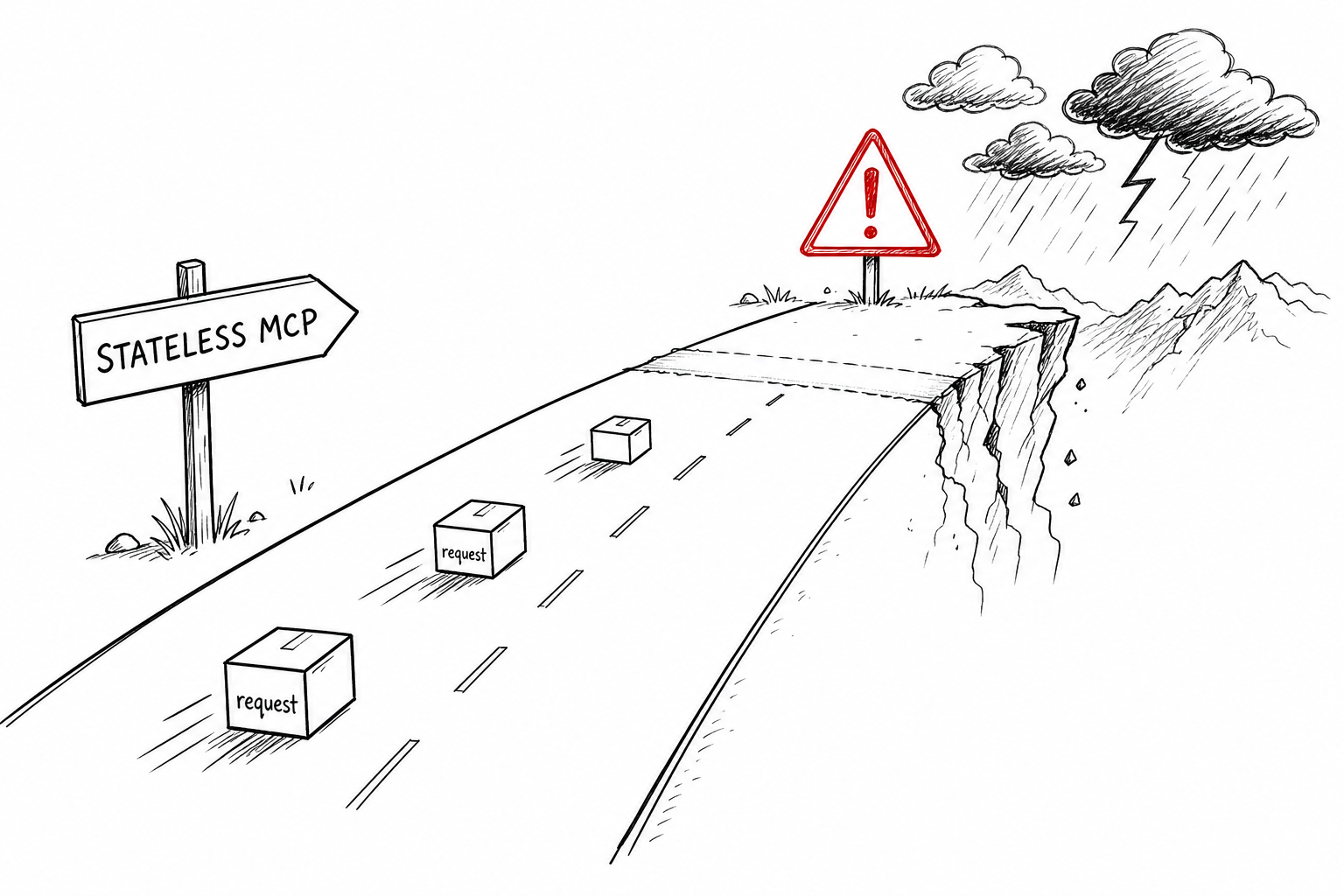
The next revision of the Model Context Protocol (MCP) is supposed to make implementation infrastructure (ie, gateways, routers, etc) easier to reuse/implement. The draft (2026-07-28) is intended to make every request self-contained and independently routable, and clean up anything that got in the way of that. Sessions, the initialize handshake, server-to-client callbacks, etc are all gone or deprecated.
If you expose MCP servers from a MCP/agentgateway, this is a consequential set of changes. And it’s already prompting a question I am hearing from platform teams: if MCP is now stateless and its routing fields live in HTTP headers, can’t I just use a plain L7 load balancer or API gateway?
Reduce LLM Spend with Semantic Routing
I spend a lot of time in Go and Rust, where a quick “one more thing” in a long coding chat can turn a tidy refactor into an hour of debugging. After the hard part is over, routine tests and follow-up questions can still burn premium-model credits. Sending every request to a cheaper model is not the answer: distributed-systems design, correctness work, and difficult debugging need more capable help.
This example combines vLLM Semantic Router (vSR)
with agentgateway to send routine Go and Rust
coding tasks to gpt-5.4-nano and escalate complex correctness,
distributed-systems, and deep-debugging work to gpt-5.5. The goal is a
reproducible cost reduction without quietly routing everything to the cheapest
tier.
How One Platform Team Scaled AI Adoption with Kagent and Agentgateway
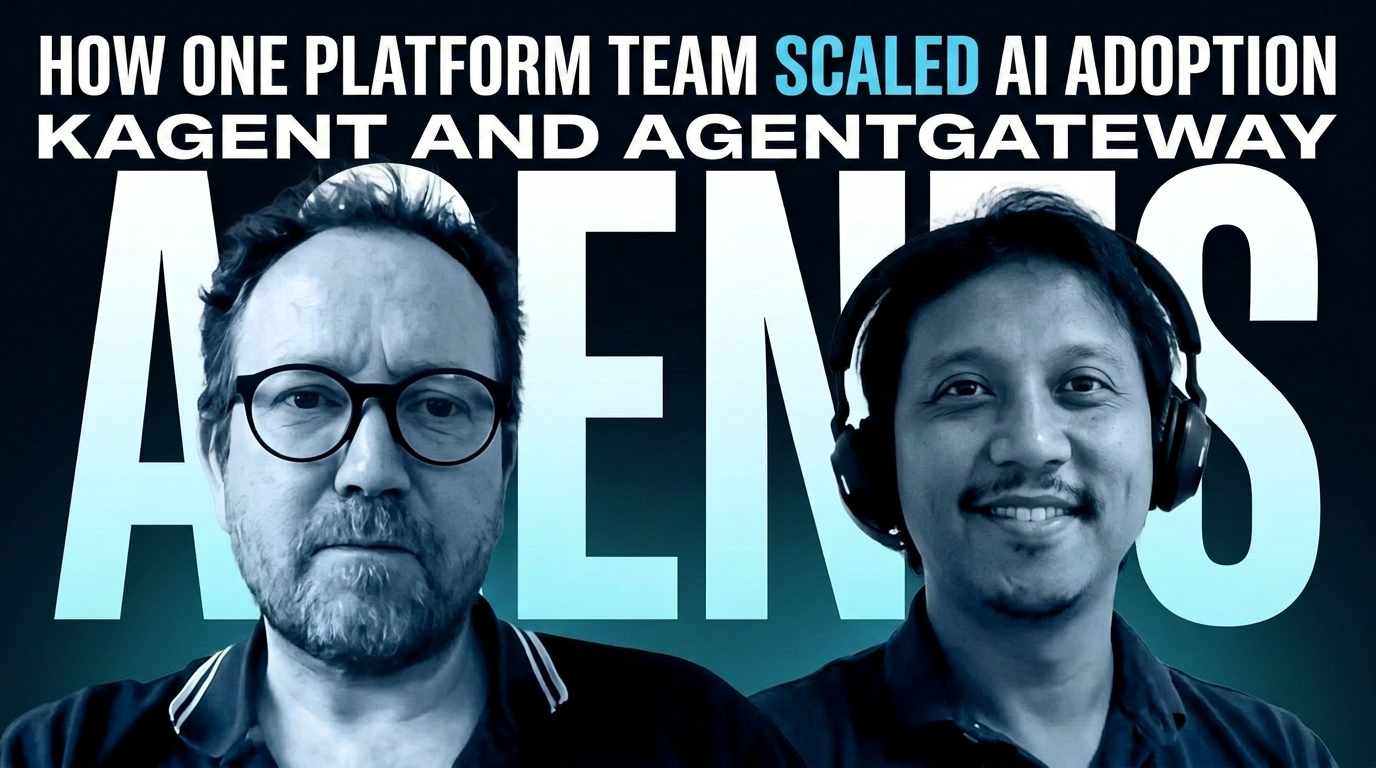
For many enterprise platform teams, the challenge isn’t a lack of ideas for AI. It’s finding a way to scale support and automation without adding headcount, compromising security, or creating another platform to maintain.
That was the challenge facing the platform team who run payments for DNB, Norway’s largest financial services group.
After attending KubeCon Europe in Amsterdam (which David Karlsen jokingly refers to as “AICon” because of the sheer amount of AI content), the team returned with a simple question: how could they use these new ideas to make themselves more effective?
Agentgateway adds token exchange, jwt-assertion, and Entra OBO
Shielding AI agents from sensitive MCP / API credentials (secrets, API keys, tokens, etc) is the prevailing best practice pattern to keep sensitive secrets from leaking into AI model conversations or across AI agent boundaries. OpenClaw, for example, has direct file system access in its most general deployment and can read files/secrets/env variables, etc and could easily send these secrets in any requests.
The right way in an enterprise environment: user identity + agent identity tied to an authorization grant, which determines what is allowed to be done. Any calls to MCP servers or APIs have their credentials injected transparently by the infrastructure. The cornerstone of this injection is exchanging an agent or user’s identity for the correct secrets/API keys/tokens.
MCP Guardrails with AARM and Microsoft Agent Governance Toolkit
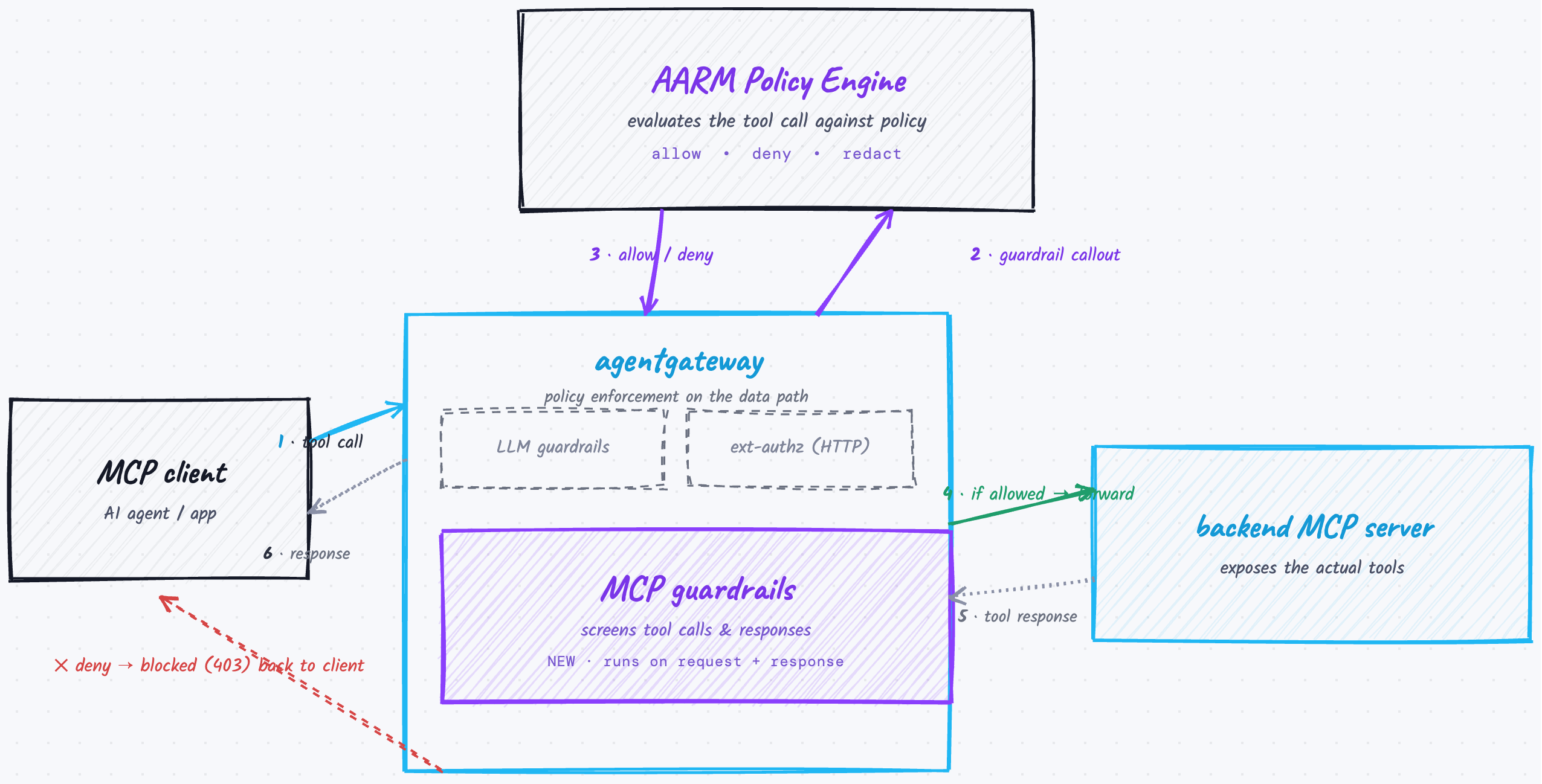
Agentgateway can call out to policy engines for LLM guardrail or for enterprise policy decisions. We’ve recently added support for MCP guardrails. This blog goes a layer deeper and shows where MCP guardrails would fit into an agentic architecture following the principals from the AARM paper.
TL;DR
I have put together a demo that digs into the AGT framework with agentgateway.
You can find it here: https://github.com/christian-posta/agent-governance-agw
AI agents are not like microservices. An agent’s intent is “interpreted” and explores its way to a solution for a goal. When agentgateway sits on the request path to other agents, MCP tools, or APIs as a policy enforcement point (PEP), we are one step closer to coralling this emergent behavior with policy and guardrails.
Benchmarking Agentgateway vs LiteLLM Part 2: Fixed Throughput
In Part 1, I pushed both agentgateway and LiteLLM to their maximum throughput and compared latency, CPU, and memory usage. The downside of that benchmark was that each gateway was processing a very different workload. agentgateway handled roughly 10× the requests of LiteLLM so it wasn’t exactly an apples-to-apples comparison.
In this post, I use a fixed target throughput of 3,000 QPS for both gateways. This allows me to compare how efficiently each proxy handles the same traffic level.
Benchmarking Agentgateway vs LiteLLM
One of the coolest features in the agentgateway 1.3 release is Virtual Models. It made me realize I could use agentgateway locally to manage all of my LLM API keys while also getting visibility into my LLM usage and costs.
I’ve heard good things about LiteLLM for quite a while, so I decided to compare its performance with agentgateway. My goal is to find a lightweight gateway that can handle very high throughput with minimal latency. (I occasionally ask LLMs to generate videos, which results in a lot of API traffic.)
Scaling Model Context Protocol: From a Proxy to an Agent Gateway
Almost a year ago, we wrote about a bet we made on Model Context Protocol (MCP): that one proxy could collapse our sprawl of internal tools, spanning services like AWS, ArgoCD, Jira, and Confluence, into a single endpoint engineers could reach from inside their IDE. We containerized a handful of stdio MCP servers behind a single HTTP interface, kept access read-only, and shipped it. It did what we hoped for. Engineers spent less time hunting for answers, onboarding got shorter, and the platform team fielded fewer “where do I find this” questions.
agentgateway Standalone: A Cost & Tokenomics Dashboard in One Command
Introduction
You’re routing LLM traffic through a gateway. But do you actually know what it costs? Not the rough monthly invoice from your provider — the real breakdown. Which model burned the most tokens last night? Which user is driving 80% of your spend? Which provider is quietly eating your budget?
agentgateway answers those questions out of the box. Every request that flows through the proxy is priced against a per-model rate catalog and surfaced in a built-in Costs and Analytics dashboard. No external observability stack, no Prometheus, no Grafana — just the standalone binary.
Agentgateway v1.3.0: LLM Consumption, Reimagined
Agentgateway v1.3.0 is here — and it’s the biggest leap yet in how you consume LLMs. We rebuilt the experience around the way developers actually work: one endpoint, the model in the request body, and every concern that used to demand a separate tool — cost, security, guardrails, observability — now handled right at the gateway. No custom proxies, no SDK sprawl, no waiting on the next provider release to catch up.
agentgateway Joins AAIF as an Open Gateway for Agentic AI Infrastructure
Originally published by the Agentic AI Foundation.
AI systems increasingly resemble distributed systems. Agents invoke tools, models route across providers, and workflows span APIs, MCP servers, databases, and other agents. As these systems move from prototypes to production, organizations are finding that infrastructure designed for traditional web traffic lacks the governance, observability, routing, and security controls that agentic systems demand.
agentgateway addresses this gap. The project has joined the Agentic AI Foundation as the fourth hosted initiative under the Linux Foundation.
Designing agentgateway: A Unified High-Performance Gateway for AI and API Traffic
Originally published by the Agentic AI Foundation.
When we started building agentgateway at Solo.io, one of the first questions we asked ourselves was whether the world really needed another gateway instead of simply reusing an existing reverse proxy like Envoy.
The answer became obvious pretty quickly.
Not because existing API gateways are broken. And not because AI traffic somehow replaces traditional application traffic.
The reason is that organizations deploying AI systems are running into a new category of operational problems that existing infrastructure was never specifically designed to address.
Agentgateway v1.2.0: we're shipping like the agents are watching
The agent ecosystem isn’t waiting for anyone. New models drop weekly. New protocols land monthly. New attack surfaces, new auth schemes, new deployment topologies — every quarter the ground shifts under whatever you built last year. A gateway that ships on a yearly cadence is a gateway that’s already obsolete.
So we don’t. Agentgateway ships on a monthly cadence — v1.2.0 lands roughly a month after v1.1.0, and the next minor will land a month after this one. The release train moves at the speed of the ecosystem, not the speed of a planning offsite.
Happy 1st birthday, agentgateway!
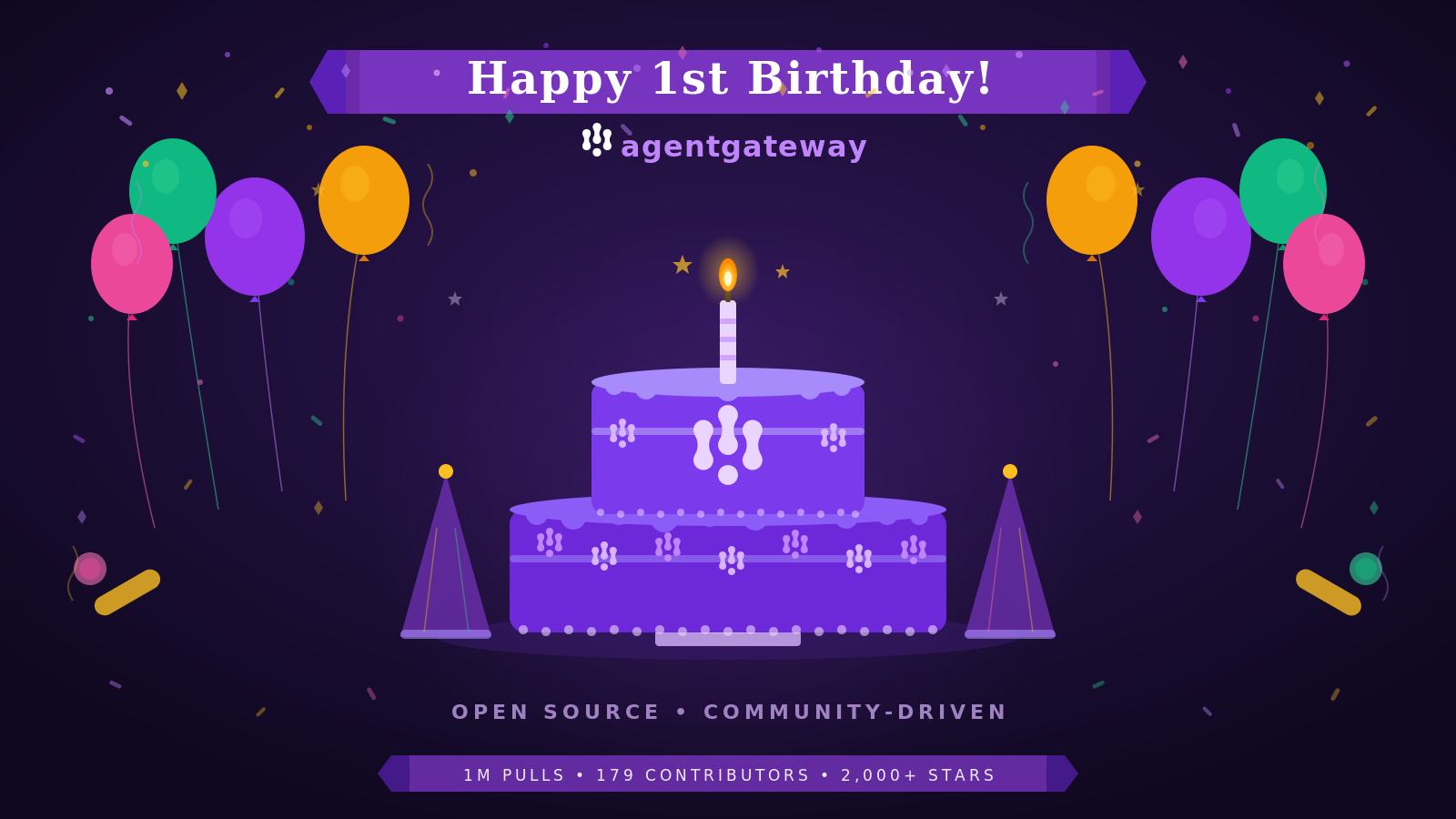
On this day in 2025, we created agentgateway after first carefully evaluating Envoy Proxy. As a company deeply invested in Envoy, we initially didn’t want to start a new project, but we needed to keep pace with the rapid evolution of AI. Building on our success developing the new proxy for Istio Ambient, we ultimately decided to create agentgateway from the ground up.
Rapid adoption among users
Since we donated the project to the Linux Foundation in August 2025, we have witnessed continued strong growth of the project. In the most recent quarter alone, we’ve reached 1 million image pulls of agentgateway.
Inference Serving with Superpowers
AI models and the surrounding ecosystem feel like they are evolving at the speed of light. A year ago, the question was how to expose model endpoints. Now the question is how to run inference as a real platform workload with policy, multi-tenancy, intelligent routing, cache locality, predictable latency, and room to scale across nodes and data centers.
This shift is exactly why agentgateway, llm-d, and the Gateway API Inference Extension (GIE) belong together.
A Year In: agentgateway Hits v1.0.0 — and the Pieces Are Converging
A lot of open-source projects feel “promising” for a long time. And then, suddenly, a few signals land at once and you realize: it’s been a year, you’ve crossed 1 million image pulls, you’re approaching 2K GitHub stars… and v1.0.0 is here.
For agentgateway, that convergence looks like this:
- ~1 year of project velocity — the repo was created in March 2025
- Crossing into the v1.0.0 release line
- ~2K stars on GitHub — nearing the threshold where adoption starts to accelerate
- ~1M image pulls — the usage curve is real
None of those numbers alone tell the story. All of them arriving together do.
Multi-Agent OpenClaw Architecture with a Kill Switch: Why Every AI Agent Needs a Gateway
The Setup
I run a multi-agent system. One coordinator agent handles user interaction, memory, and routing. Specialist sub-agents get spawned on demand for domain-specific tasks — security audits, network diagnostics, cloud management, infrastructure automation. Each specialist has its own system prompt, its own toolset, and runs on a different model.
It works. The specialists are good at their jobs. The coordinator knows when to delegate and when to handle things itself.
MCP Multiplexing with AgentGateway
Introduction
As your agentic AI environment grows, you end up with a sprawl of MCP servers — one for time utilities, one for general-purpose tools, one for Slack, another for GitHub. Each server exposes different tools, runs on a different port, and needs its own connection configuration.
Your MCP clients (Cursor, Claude Desktop, VS Code) shouldn’t need to know about every server individually. They should connect to one endpoint and see all available tools.
Connect Any IDE to GitHub MCP Server Through Agentgateway
Introduction
Modern AI-powered IDEs and coding agents ship with built-in MCP client support. That means you can connect them to GitHub’s remote MCP server to give your AI assistant direct access to issues, pull requests, code search, and repository management.
But connecting directly to GitHub means no visibility into what tools are being called, no rate limiting, and no centralized credential management. Every developer has their own PAT, every tool call goes straight to GitHub ungoverned.
Open Source LLM Observability: Tracing AI Calls with AgentGateway and Langfuse
Introduction
You’ve got your AI gateway routing LLM traffic. But can you actually see what’s happening? Which models are being called, how many tokens are being consumed, what prompts are going in and what completions are coming back?
This guide shows you how to integrate Langfuse with Solo AgentGateway to get full observability over every LLM request — without touching your application code. We’ll go from zero to traced requests on a local kind cluster in under 10 minutes.
Explore Gateway API and Agentgateway with ExtAuth Match 💕 Game

With Valentine’s Day around the corner, we started thinking about the amazing contributors and users in our community. What better way to celebrate than by sending some love ❤️ — while having a little fun learning together?
Your First AI Route: Connecting to OpenAI with AgentGateway
Introduction
This is a how-to guide to setup AgentGateway and get your first AI route working with OpenAI. We’ll walk through the complete setup from scratch - creating a Kubernetes cluster, installing AgentGateway, and connecting it to OpenAI’s API.
What is AgentGateway?
AgentGateway is an open source, AI-native data plane built in Rust for connecting, securing, and observing AI traffic. Originally created by Solo.io and now a Linux Foundation project, it acts as a purpose-built proxy layer between your applications and AI services like LLMs, MCP tool servers, and other AI agents.
Getting started with Multi-LLM provider routing
How to: Building Agentgateway to support Multi-LLM providers.
Agentgateway makes it simple to route traffic to multiple LLM providers through a single gateway using the Kubernetes Gateway API. This guide walks through setting up agentgateway OSS on a local Kind cluster with xAI, Anthropic, and OpenAI backends, all routed through a listener named llm-providers.
One of the most common patterns in AI-native infrastructure is routing traffic to multiple LLM providers behind a single entry point. Whether you’re comparing models, building failover strategies, or just want a unified API across providers, agentgateway gives you a clean Kubernetes-native way to do it using the Gateway API and AgentgatewayBackend custom resources.
agentgateway adds support for migrating from ingress-nginx
ingress-nginx retirement
In November 2025 the Kubernetes community announced the retirement of the venerable ingress-nginx Ingress controller.
Ingress-nginx was one of the first options available in Kubernetes for configuring ingress traffic to workloads hosted on Kubernetes. The story of ingress and traffic management has evolved steadily over the years, culminating in the Kubernetes Gateway API specification, which offers a more robust and complete solution to the problem.
Support for ingress-nginx is scheduled to end in March.
Enterprise MCP SSO With Microsoft Entra and Agentgateway
MCP servers are cropping up all over the enterprise like weeds in a nice lawn. And just like weeds, this can cause problems. MCP servers should be secured, but how? The official spec says use OAuth, but that is not appropriate within an enterprise organization.
On a recent LinkedIn post I made the point:
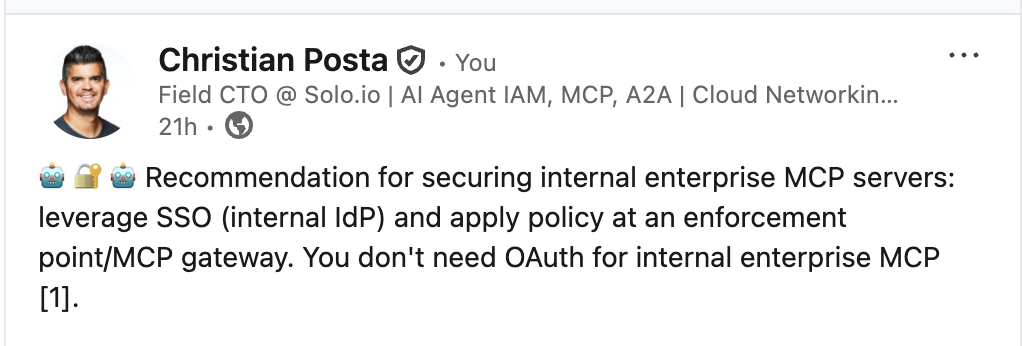
Any internal enterprise MCP client / AI agent that communicates to an [remote] MCP server should be secured with enterprise SSO. If the agent is acting autonomously, then agent identity should be enforced. But that is for a different post… (check out my 5 part series on Entra Agent ID).
Provider Rate Limiting is Not Enough for Enterprise LLM Usage
Hosted LLM providers like OpenAI and Anthropic have rate limiting capabilities centered around requests per minute (RPM) and tokens per minute (TPM). These are specified at the “organization” level and “project” level. API keys are associated with an organization or project, and each call is subject to token or rate limit restrictions. The actual limits are set by the provider, not you. They will depend on what tier you pay for, but generally not directly configurable. For example:
Solo.io Contributes agentgateway to Linux Foundation to Make AI Agents More Accessible, Capable, and Secure
Today at Open Source Summit Europe, the Linux Foundation accepted agentgateway, a new open source AI-native project created by Solo.io. Agentgateway provides drop-in security, observability, and governance for agent-to-agent and agent-to-tool communication and supports leading interoperable protocols, including Agent2Agent (A2A) and Model Context Protocol (MCP).
Building the Go-To AI Gateway
There are many gateways available today, but most were designed before the rise of AI agents and struggle to support modern AI protocols without major rearchitecture. As a company with deep expertise in Envoy, we initially considered it as the foundation for agentgateway. However, we quickly realized that supporting modern agent protocols like A2A and MCP would require a significant re-architecture of Envoy itself.
MCP Authorization the Easy Way
In June 2025, the MCP community updated the specification to alleviate some of the concerns from the previous version regarding MCP Authorization. However, this update introduces new concerns, especially around enterprise usage. Nevertheless, many public facing MCP clients (Claude, VS Code, etc) do implement the MCP Authorization spec, and many public facing MCP services are expecting this.
In agentgateway, we are trying to make this easier for those building MCP servers. In recent builds, we’ve introduced a way to configure mcpAuthentication which leverages an external OAuth provider, specifically implementing the MCP server side of the MCP Authorization spec for you via configuration.
Announcing A2A, MCP, and Kubernetes Gateway API support
Today, we’re excited to share the next major milestone: agentgateway is now a full-featured, AI-native gateway that combines deep MCP and A2A protocol awareness, robust traffic policy controls, inference gateway support, Kubernetes Gateway API support, and unified access to major LLMs, all purpose-built with Rust for real-world agentic systems.
Back when we first introduced agentgateway, it was designed to fill a critical gap in the AI stack: enabling structured, secure, and scalable communication between agents, tools, and LLMs using protocols like MCP and A2A. Solo.io wrote about this in a blog post where we explained why traditional API gateways fall short in agentic environments. Since then, the project has grown tremendously.
No posts in this category.